
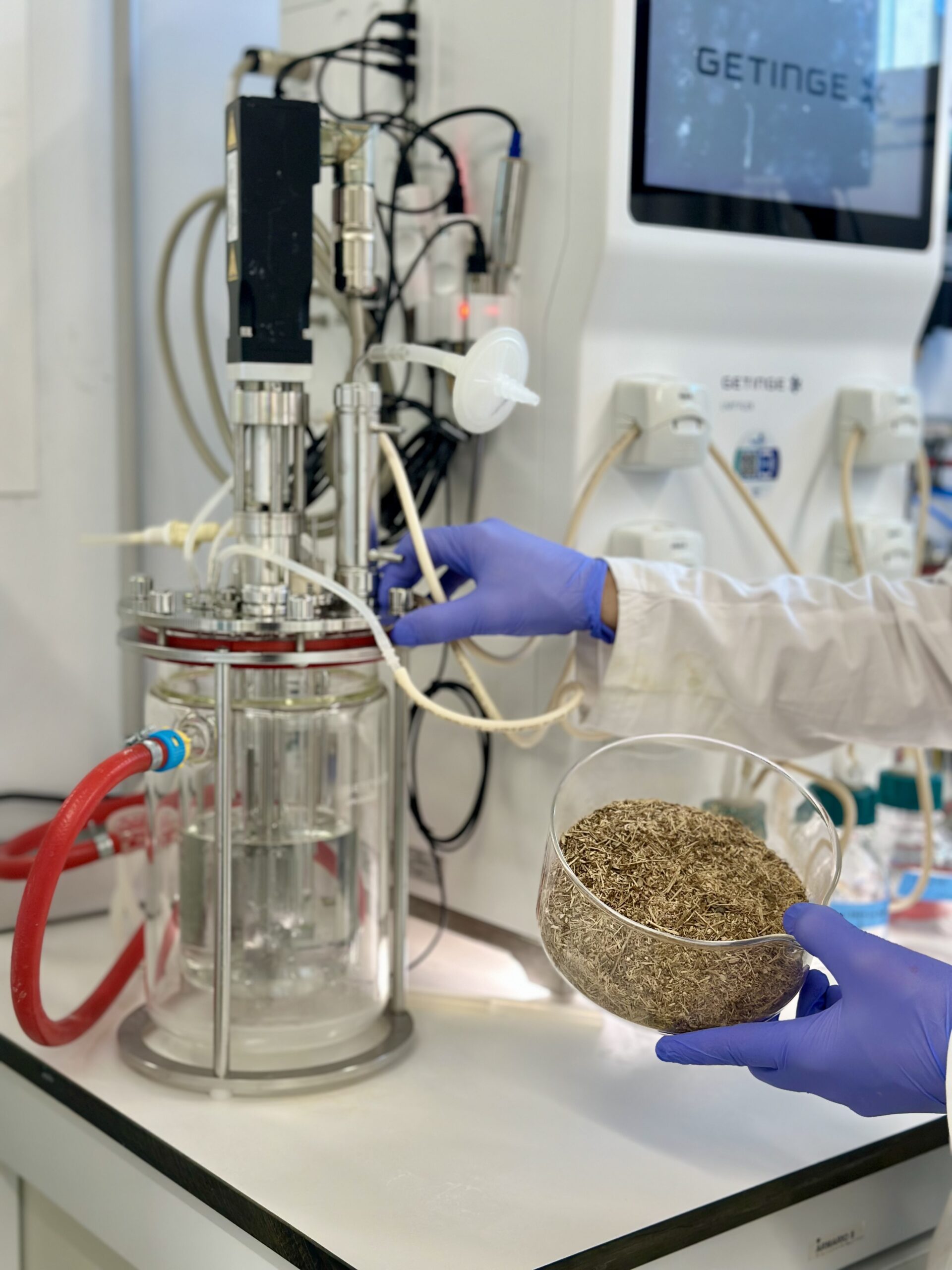
Each year, the regional agricultural sector produces around 800,000 tonnes of plant-based residues, including rice straw and citrus pruning waste. Current biomass recovery methods rely heavily on commercial enzymes, which can account for up to 40% of total processing costs, limiting large-scale industrial application.
The Biovalsa project addresses this challenge by developing alternative processing routes for the valorisation of agricultural residues. The project is coordinated by Aimplas and is funded by IVACE+i Innovation with support from the European Union through the ERDF Comunitat Valenciana programme (2021–2027).
The project focuses on replacing conventional chemical and enzymatic treatments with alternative methods that enable the separation and recovery of the three main fractions of lignocellulosic biomass: cellulose, hemicellulose and lignin. These fractions are intended for use as feedstock in different bioplastic production pathways.
Recovered cellulose is processed into lactic acid, a key precursor for polylactic acid (PLA), one of the most widely used bioplastics. Hemicellulose is used to obtain succinic acid, which is required for the production of polybutylene succinate (PBS), a biopolymer characterised by improved flexibility and thermal resistance compared with PLA.
Lignin, due to its antimicrobial properties, is being evaluated as a functional additive to limit microbial growth. Its integration could increase the value of biodegradable and compostable plastic formulations while broadening their potential application range.
In addition to Aimplas, the Biovalsa consortium includes the University Institute of Food Engineering at the Polytechnic University of Valencia and three companies based in the Valencian Community. Bioban is responsible for genomic analysis to identify suitable bacterial strains for biomass conversion processes. Viromii is assessing the economic feasibility of the proposed biocomposite production routes. Prime Biopolymers, as the end user, is producing the biomaterials and evaluating their technical applicability.
During the first year of the project, progress has been made in separating rice straw components using non-toxic alternative methods. Various bacterial and microbial strains capable of converting cellulose and hemicellulose into lactic and succinic acids are currently under evaluation.