

Real-time data analysis reduces losses
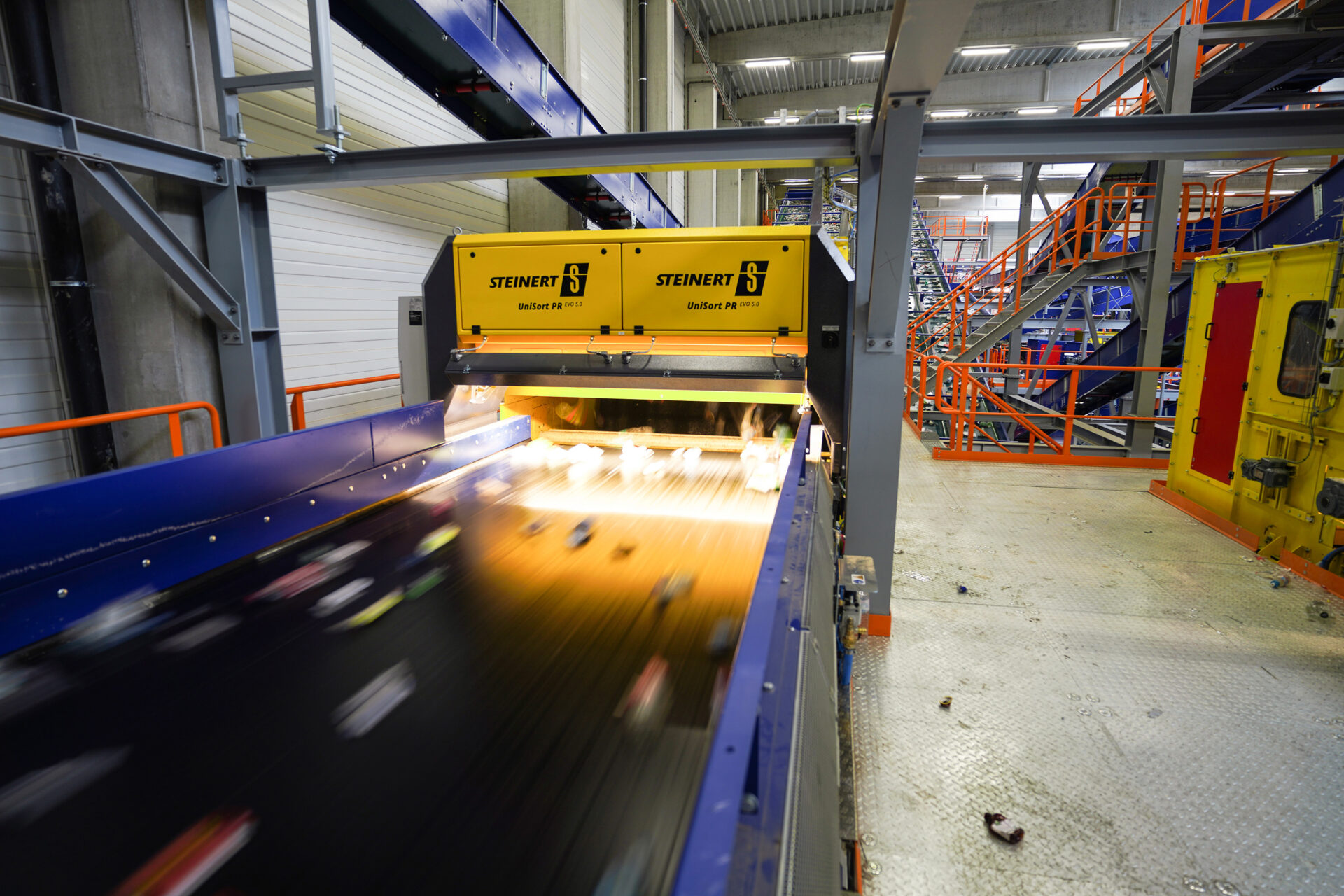
Near-infrared sorting enables precise separation, particularly for plastics, provided that sensors operate under stable conditions. In practice, contamination of sensors, nozzle bars or light sources can significantly impair performance. Such effects are often detected with delay during manual monitoring, while the system continues to produce lower-quality output.
The ESA app combines performance monitoring with anomaly detection to identify these deviations at an early stage. Sensor data are analysed continuously and visualised, while material flows are recalculated based on multiple NIR data sources and conveyor speeds. This allows ongoing determination of key performance indicators such as sorting efficiency.
AI-based anomaly detection identifies deviations in real time and issues alerts. According to the companies, this approach can reduce periods of suboptimal sorter output by several hours per machine each month. At the same time, higher fraction purity contributes to improved material value.
Monitoring of material flow and utilisation
In addition to performance losses, the system detects material blockages and irregular particle distribution on conveyor belts. Through continuous synchronisation of throughput data from different sensors, the application also indicates underutilisation of plant capacity.
Digital integration for process optimisation
The ESA app combines performance monitoring with further modules for maintenance management, operational documentation and data storage. It is designed as a modular system for digital plant management and process optimisation.
The cooperation is based on the integration of sensor data via existing interfaces of Steinert UniSort systems. This enables direct data transmission and evaluation within the ESA app. The companies state that the exchange during development focused on improving the usability of sensor data for operational decision-making.
Both partners intend to continue the collaboration with the aim of further developing data-based optimisation of recycling processes through NIR sorting performance monitoring.