
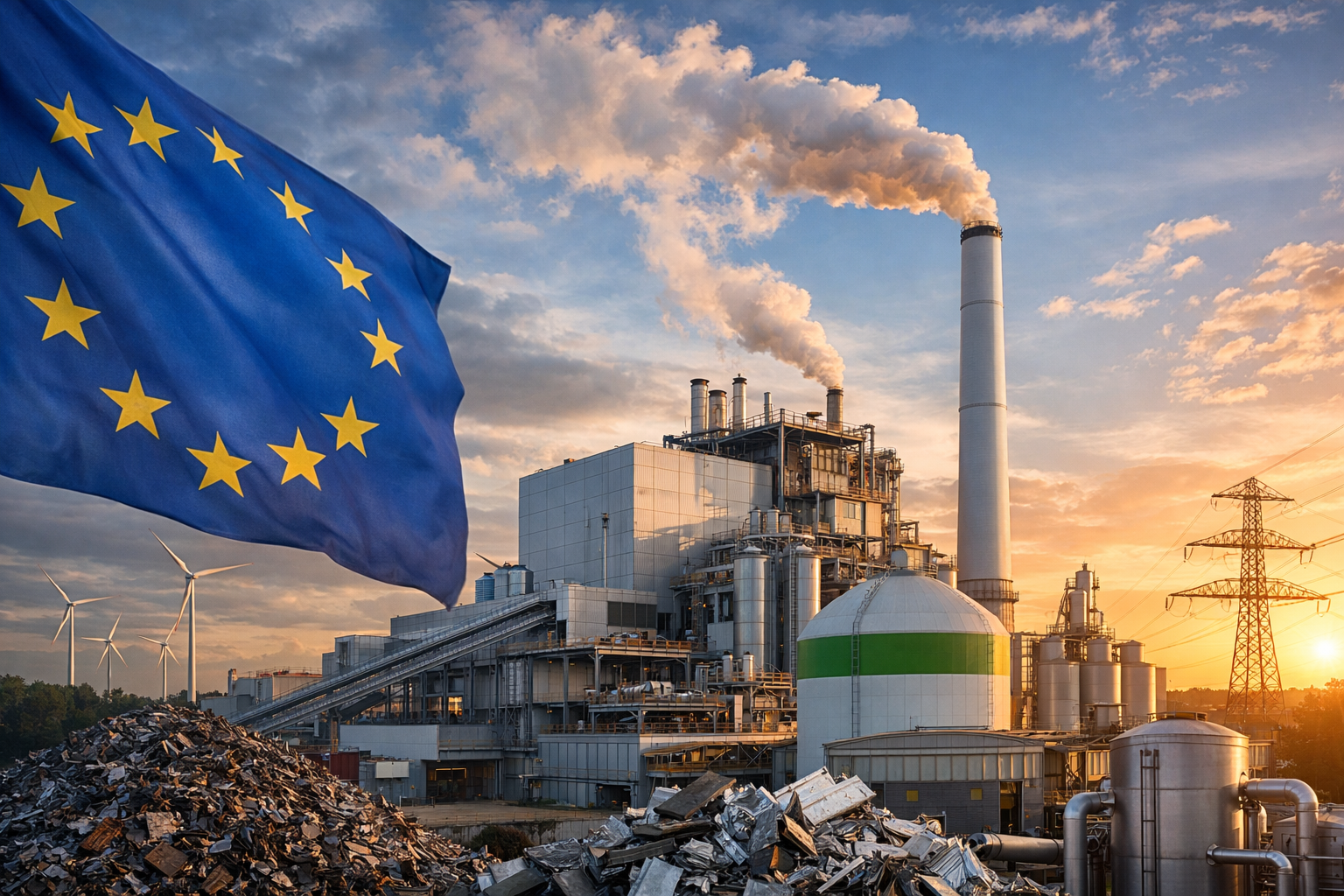
According to the organisation, suppliers of Waste-to-Energy (WtE) technology contribute to the objectives of the Act through the development and manufacturing of equipment used in waste treatment and energy recovery.
Member companies of ESWET design and manufacture equipment used in Waste-to-Energy facilities that treat non-recyclable waste while recovering energy and materials. These facilities also increasingly integrate carbon capture technologies for carbon removal and utilisation. Waste-to-Energy plants additionally provide electricity and heat on a continuous basis. A significant share of the energy produced originates from the biogenic fraction of waste. In industrial clusters, this energy can replace fossil-fuel-based heat and power supply.
European industry, including the chemicals sector, continues to face high and volatile energy prices. In this context, domestically generated and dispatchable energy sources are regarded by industry stakeholders as an element of energy security. Waste-to-Energy facilities can contribute to reducing reliance on imported natural gas and provide heat and electricity to industrial users, which may support efforts to lower the carbon intensity of industrial production.
ESWET emphasises that Waste-to-Energy technology manufacturers could be included in industrial manufacturing acceleration areas proposed under the Industrial Accelerator Act. In addition, Waste-to-Energy facilities may be considered as infrastructure that supplies energy and enables the recovery of secondary raw materials within industrial clusters.
The Act also recognises biomass, waste and captured carbon as potential sustainable carbon sources. In the context of industrial decarbonisation pathways, captured biogenic carbon dioxide from Waste-to-Energy plants could serve as a carbon feedstock for the chemical industry where carbon capture technologies are applied.
Secondary raw materials recovered from Waste-to-Energy processes may also play a role in industrial supply chains. Metals such as iron and aluminium, as well as mineral fractions extracted from incineration bottom ash, are recovered in European facilities and can be reintroduced into manufacturing processes. According to ESWET, these materials contribute to reducing the carbon intensity of production and support supply chain resilience. The organisation indicates that the contribution of Waste-to-Energy facilities to the supply of secondary raw materials could be reflected in policy frameworks addressing low-carbon manufacturing and public procurement criteria.
ESWET also points to the interaction between the Industrial Accelerator Act and forthcoming legislative initiatives related to the circular economy. From the organisation’s perspective, policy frameworks addressing industrial competitiveness and circular resource use will influence the deployment of technologies related to circular energy, secondary raw materials and captured carbon in European industrial value chains.