
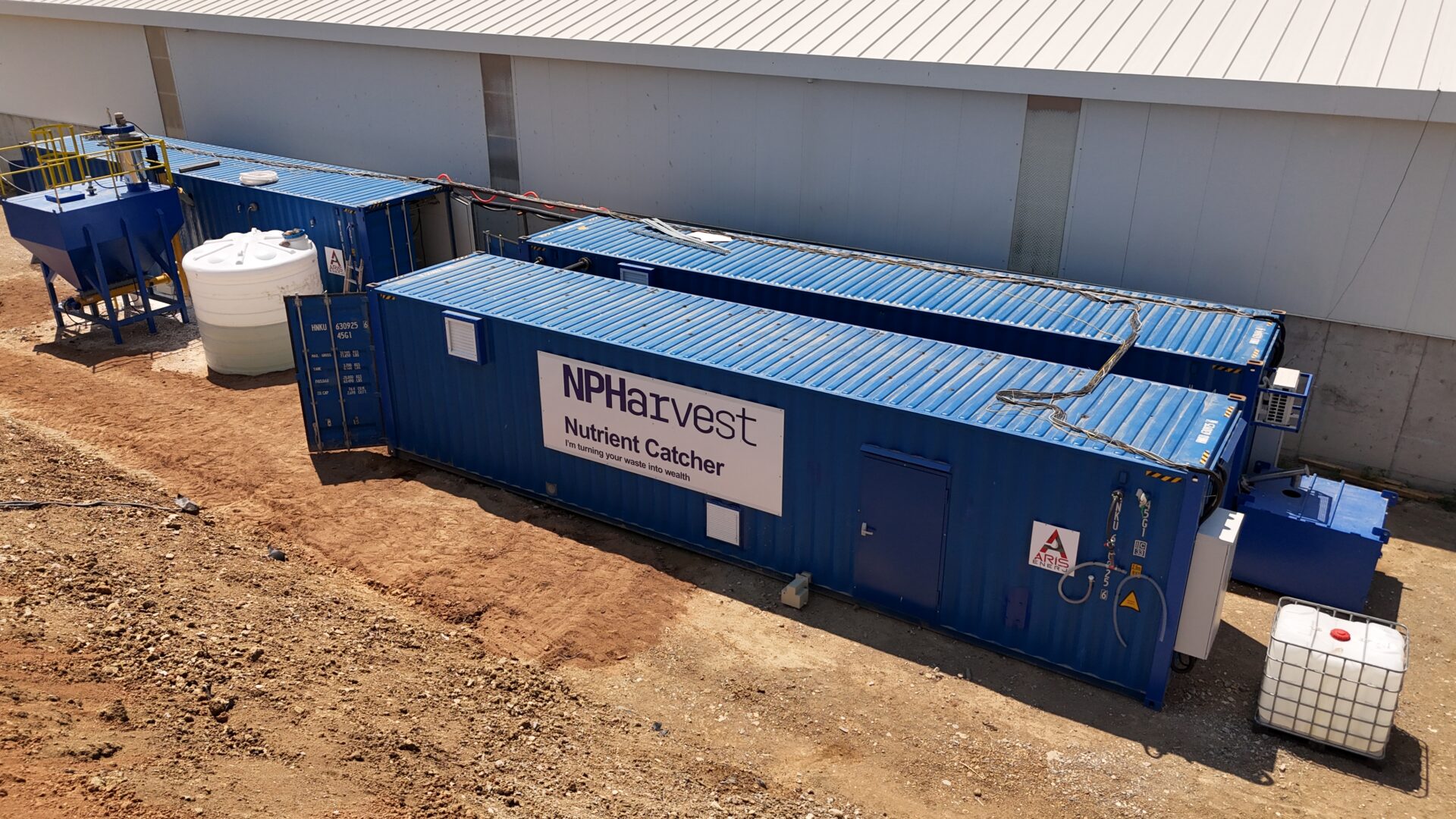
The demonstration unit began operation on 10 March and is scheduled to run for four months. It is designed to process around 20 cubic metres of liquid digestate per day. According to the company, the system can recover up to approximately 26 tonnes of nutrients per year from the side stream.
Focus on nitrogen and phosphorus
The NPHarvest nutrient recovery process is based on membrane technology and is designed to recover nitrogen and phosphorus from liquid waste streams. The recovered materials can be converted into fertilizer inputs such as ammonium sulphate and calcium phosphate.
During the first month, the pilot’s performance was monitored through online data and laboratory analysis. Results were also checked by an external laboratory in Oldenburg, with measurements reported to be closely aligned with NPHarvest’s internal analysis.
Digestate management under pressure
The pilot comes as German biogas operators face tighter requirements for nutrient management. Under the EU Nitrates Directive, nitrogen application in vulnerable zones is limited to 170 kilograms per hectare per year. Germany has also introduced stricter fertilizer rules aimed at reducing nutrient surpluses and nitrate levels in groundwater.
With more than 9,700 biogas plants in operation, limits on digestate spreading and higher transport costs are affecting the economics of biogas operations. Recovering nutrients directly from liquid digestate could help operators reduce surplus volumes while producing marketable fertilizer inputs.
Modular integration into biogas plants
NPHarvest states that its system can capture up to 90 percent of nitrogen and phosphorus from liquid waste streams. The company positions the unit as a plug-in solution for existing biogas infrastructure, designed to operate without interrupting plant operations.
The German pilot follows an industrial-scale demonstration at a biogas plant in Ankara, Türkiye, where the company tested the system under commercial operating conditions.