
Michael Brunn
Chefredakteur

Chefredakteur

Implementing circular principles requires collaboration across company boundaries - especially for SMEs, which often have limited financial and organisational resources to mobilise. A purely company-centric view of circular business models falls short because it ignores the dependencies on partners, infrastructures and regulations. An ecosystem perspective, on the other hand, takes into account roles, relationships, material and data flows as well as governance mechanisms, thus opening up realistic paths to impact and scaling. The study "SMEs in the Circular Economy: Four Ecosystem Strategies for Circular Business Models" conducted by Swedish and Finnish scientists links this perspective to a decision-making grid: if you know your role in the ecosystem and its degree of maturity, you can choose a suitable strategy and implement it consistently. The aim is to make this logic understandable and translate it into action-oriented recommendations for the practice of the circular economy. The study was published in the journal "Organization & Environment".

Population growth, urbanisation and industrialisation have led to a sharp increase in waste volumes worldwide. Conventional systems with collection routes, manual sorting and landfilling are inefficient, cost-intensive and ecologically problematic. What is needed is a shift to more sustainable, technology-based approaches. Digital technologies such as artificial intelligence (AI) and the Internet of Things (IoT) enable the use of real-time data, intelligent route planning, automated sorting and better traceability. These factors can improve efficiency and resource use and reduce ecological pollution. The study "Revolutionising urban solid waste management with AI and IoT: a review of smart solutions for waste collection, sorting and recycling" by a Saudi Arabian researcher sheds light on the status of such solutions, their potential and limits, as well as framework conditions for sustainable waste management. The study was published in the journal "Results in Engineering".

Since the 1950s, global plastic production has grown rapidly and now reached several billion tonnes overall. The majority of these plastics are still being landfilled, incinerated or released into the environment in an uncontrolled manner after a short period of use, while only a small proportion is recycled. To counteract these developments, the idea of a circular economy for plastics is gaining in importance. In addition to mechanical and chemical processes, biocatalytic approaches are increasingly coming into focus. Enzymes offer the potential to break down certain types of plastic into their monomers under mild conditions, thus creating high-quality recyclates. The public perception of "plasticeating bacteria" illustrates the fascination for this technology, but also carries the risk of inflated expectations. Prof. Wolfgang Zimmermann, professor emeritus at the Institute of Analytical Chemistry at the University of Leipzig, has carried out an analysis in his report "Biocatalytic recycling of plastics: facts and fiction" in order to realistically classify the opportunities and limits of biocatalytic recycling. The report was published in "Chemical Science".

Plastic packaging accounts for almost 40 per cent of global plastic production and, due to its short life cycles, its recycling is considered a key factor for a functioning circular economy. Despite increasing collection volumes, only a small proportion has so far entered the market as high-quality recyclate. In the study "Enhancement in Post-Consumer Mechanical Recycling of Plastics: Role of Design for Recycling, Specifications, and Efficient Sorting of Packaging Material", Austrian scientists examined three key levers for high-quality plastics recycling: Design for Recycling (DfR), binding specifications and efficient sorting technologies. Their interaction determines whether material flows are routed in closed loops or downcycled into inferior applications. The study was published in "Polymers".

Metal recycling is central to the decarbonisation of industry, particularly steel production. As the shift toward electric steel mills continues, scrap is expected to satisfy the majority of raw material demand. In the UK, where all steel production is planned to be based on scrap as of 2025, recycled steel is increasingly regarded as a strategic resource. In this context, political calls for export restrictions are gaining traction. While intended to secure domestic supply, such measures would jeopardise an industry that currently sells 70-80 per cent of its products overseas. The study "Assessing the impact of potential restrictions on UK recycled metals exports - an evidence-based assessment for the British Metals Recycling Association", conducted by Sheffield Hallam University for the British Metals Recycling Association (BMRA), examined the possible consequences of such restrictions. It combines economic modelling with surveys of businesses to illuminate the overall effects on value added and employment, as well as to present the perspectives of the various companies involved. The aim is to provide an evidence-based foundation for discussions about the role of recycling in the transformation of the British steel industry.

The mobility transformation is leading to a significant increase in demand for raw materials as well as challenges in the globally networked supply chains for batteries. For European manufacturers, the main challenge is the sufficient supply of relevant key raw materials. This is growing even more due to the recyclate use quotas provided for in the new EU Battery Regulation. These are the challenges addressed in the study "Material cycles for traction batteries - raw material potentials of battery recycling in the automotive industry and options for fulfilling extended producer responsibility in Europe", which was conducted by the Oeko-Institut on behalf of GRS and with the support of Agora Verkehrswende.

Since 1950, the global production of polymers has risen from 1.7 million to 348 million tonnes per annum. This development is due to the low cost and versatile properties of plastics, but has led to considerable environmental pollution. International initiatives are increasingly concerned with reducing polymer production and consumption as well as promoting recycling. The aim of the study "Evaluating the potential to reduce the global demand for polymers" conducted by Chinese and British scientists is therefore to systematically record the global material flows of 14 polymer groups, to develop projections for demand and waste generation up to the year 2100, and to quantify the potential for reducing demand as well as mechanical and chemical recycling. The study was published in "Resources, Conservation & Recycling".

The current geopolitical crises are also leaving their mark on the recycling industry. Therefore, at the autumn conference of the BIR in Bangkok at the end of October, trade restrictions in their various forms were the focus of discussions.

The EU has put in place a solid policy framework for the climate transition. For further progress, a fact-based, practice-oriented approach is needed in order to use policy and resources in a targeted manner. In its "2025 Flagship Report: State of EU Progress to Climate Neutrality", ECNO evaluates 13 sectoral and overarching building blocks.
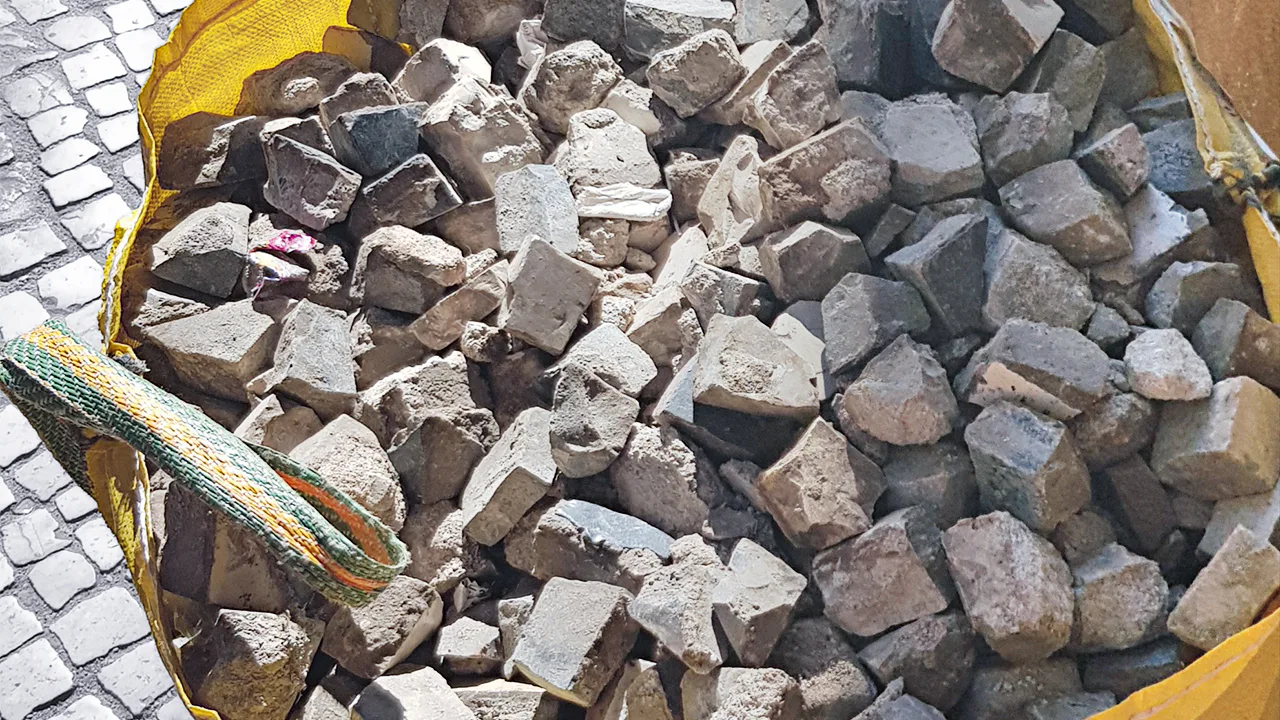
Construction and demolition waste (C&DW) accounts for around a quarter of all waste generation worldwide. Due to urbanization and infrastructure growth, especially in emerging markets, volumes are rising continuously. These volumes of waste put a strain on landfills, ecosystems and resources, but at the same time offer significant opportunities. Recycling and reuse could significantly reduce raw material consumption and greenhouse gas emissions. In practice, however, this potential has hardly been exploited so far. In the report "A critical review on recycling and reuse of construction and demolition waste materials", Indian scientists have examined current processes, obstacles and strategies of C&DW recycling and show ways in which the construction industry can be transformed to a circular use of resources. The report was published in "Cleaner Waste Systems".