Michael Brunn
Editor-in-Chief

Editor-in-Chief

SK tes has announced a strategic partnership with the BMW Group.

Scrap exports have been keeping recycling businesses alive, serving as a counterbalance to the extremely low EU demand for recycled materials.Closing the EU borders for scrap exports will have detrimental consequences to the environment, the economy, and the EU's competitiveness. The prolonged decline of European steel and aluminium production is concerning for recyclers, as it threatens Europe's competitiveness and 'green' and digital transitions. Any calls by the European steel and aluminium industry to restrict scrap exports are completely unjustifiable and unacceptable, especially when the supply of recycled scrap has never been the reason behind any decreased activity of EU mills.Trade challenges cannot be addressed through protectionism, and protectionist measures must not work against Europe's circularity backbone: the European recycling industry. We urge EU policymakers to preserve open trade and carefully consider the EU recycling industry's contributions to the EU economy and sustainability, and to only endorse measures that encourage them to keep innovating and generating resources, instead of hampering them and threatening their very existence.

The European glass packaging industry also wants to achieve the goal of climate neutrality by 2050. This is a challenge in a traditionally energy-intensive industry. The European association FEVE has outlined the path to a low-carbon glass packaging industry in a paper. Low-carbon and affordable electricity is particularly important.

The recoSTAR PET 215 HC iV+ features Starlinger's biggest single extruder size, reaching an output of up to 2,700 kg of bottle-grade pellets per hour. The PET bottle-to-bottle recycling system is equipped with a pre-drying unit, high-vacuum degassing, a continuous filtration system, and an underwater pelletizer. The viscoSTAR SSP reactor installed at the end of the recycling process further increases the viscosity and level of decontamination of the produced pellets. The entire recycling process is based on the FIFO principle, ensuring uniform treatment of every single flake at the front end and each pellet at the back end for outstanding food-contact decontamination.
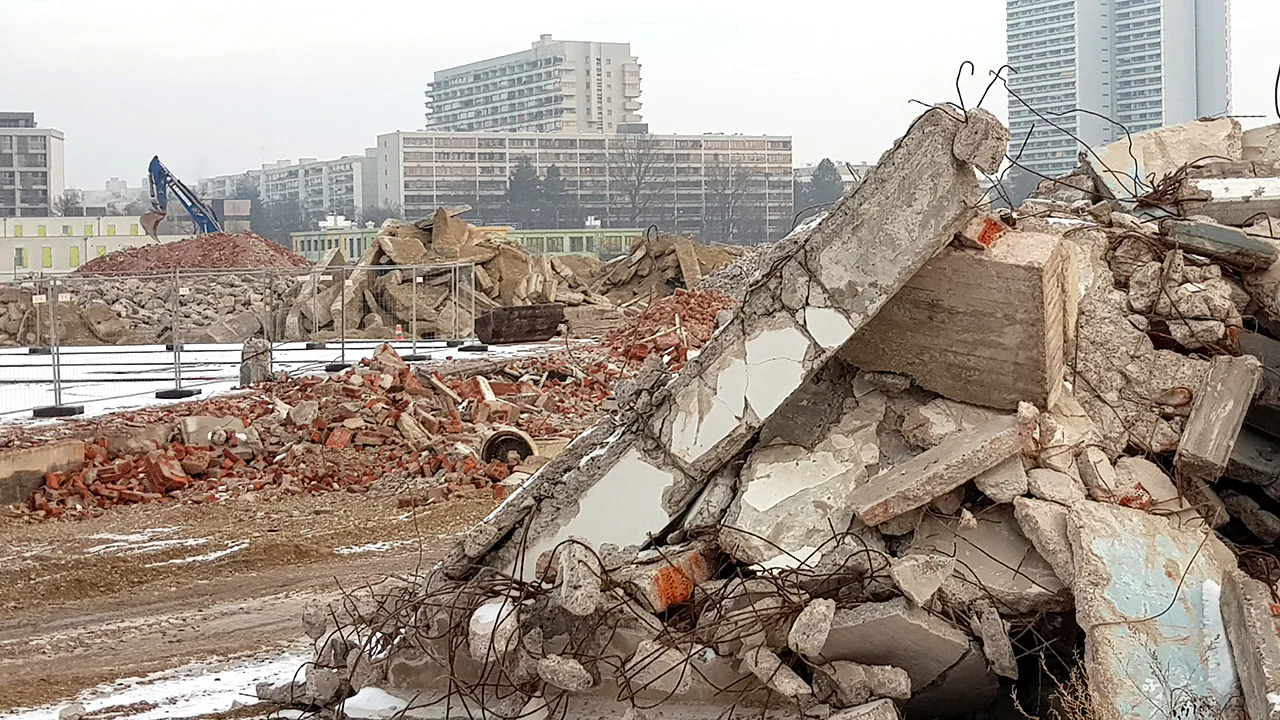
Public procurement plays an important role in the European economy. At the same time, it also has a considerable influence on the use of sustainable products. This is especially true in the construction sector. However, as the "Green Public Procurement in Construction" study conducted by Ramboll on behalf of the Environmental Coalition on Standards (ECOS) shows, there is still a lot of catching up to do here.

Most countries in the world have agreed on the climate target of the Paris Agreement. However, most of them are still having a hard time implementing it. As a study by Germanwatch, the New Climate Institute and Climate Action Network International shows, most countries lack the necessary ambition.

Due to an announced amendment to the Compost Ordinance, biogenic waste may only be composted in Austria in the future if its impurity content is less than 2 percent by weight. In many cases, this is a problem. Paul Demschar, research assistant at the Chair of Waste Recycling Technology and Waste Management (AVAW) at the University of Leoben, dealt with the solution of this problem in his master's thesis. He was also honored for his work with the Hans Roth Environmental Award 2024.

Buildings play an important role in climate neutrality and sustainability. However, they must also be built or renovated accordingly - or even insulated. Insulation materials can make up up to 50 percent of a building fabric. Therefore, it makes sense to make them as environmentally friendly as possible. If you also consider that more has to be renovated than newly built, insulation materials become even more important. After all, older buildings in particular have a lot of catching up to do when it comes to insulation. In her master's thesis at Danube University Krems, Zuzana Zavodsky dealt with the question of how insulation materials made of fungal mycelium can contribute to decarbonization.

On behalf of BKV, with the support of Plastics Europe Germany, BDE, bvse, VDMA Kunststoff und Gummimaschinen, IK - Industrievereinigung Kunststoffverpackungen, KRV - Kunststoffrohrverband, VinylPlus Deutschland, GKV - Gesamtverband Kunststoffverarbeitungde Industrie, AVK - Industrievereinigung Verstärkte Kunststoffe, FSK - Fachverband Schaumkunststoffe und Polyurethane, TecPart - Verband Technische Kunststoff-Produkte, pro-K Industrieverband durablee Kunststoffprodukte and Reusable Systems, the IG BCE Industrial Union Mining, Chemistry, Energy and the VCI - Association of the Chemical Industry, Conversio has created the current "Material Flow Diagram Plastics".

The Swedish DRS company Returpack will increase the deposits on all packaging: from SEK 1 to SEK 2 on aluminium cans and small PET bottles and from SEK 2 to SEK 3 on large PET bottles.