
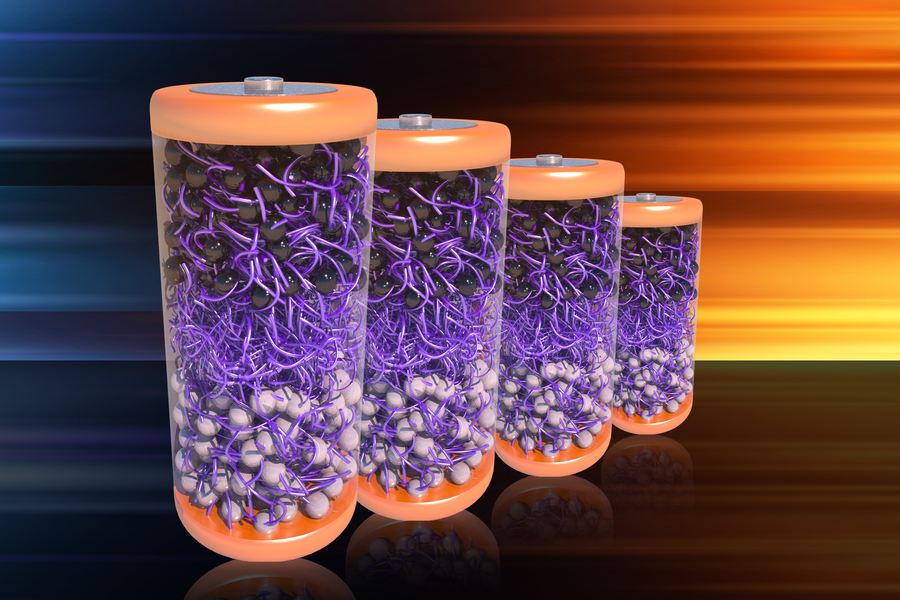
The material, presented in the journal Nature Chemistry, functions as an ion-conducting component in a solid-state battery cell and can subsequently be separated into its molecular building blocks through exposure to an organic solvent. The approach is intended to simplify battery disassembly and improve material recovery.
The increasing deployment of electric vehicles is expected to result in growing volumes of end-of-life lithium-ion batteries. Conventional recycling processes typically involve mechanical shredding combined with thermal or chemical treatment. These methods generate mixed material streams that require further complex separation steps. In addition, commonly used liquid electrolytes are flammable and can degrade into hazardous by-products, requiring specialised handling.
The research team focused on developing a recyclable electrolyte based on aramid amphiphiles, a class of molecules that self-assemble in aqueous environments. The molecular structure incorporates polyethylene glycol segments to enable lithium-ion transport. When dispersed in water, the molecules form nanoribbons with ion-conductive surfaces and mechanically robust backbones stabilised by hydrogen bonding. The resulting gel can be processed by hot pressing into a solid-state electrolyte layer.
Mechanical testing indicated that the material withstands stresses associated with battery assembly and operation. The researchers integrated the electrolyte into a solid-state cell using Lithium iron phosphate as the cathode material and Lithium titanate as the anode material. The electrolyte enabled lithium-ion transport between the electrodes. However, interfacial polarisation limited ion transfer into the electrode materials during high-rate charging and discharging, resulting in lower performance compared with established commercial lithium-ion battery systems.
A key feature of the material is its reversibility. When the assembled cell is immersed in an organic solvent, the electrolyte dissolves and the battery components separate. Because the electrolyte acts as a structural and conductive interface between cathode and anode, its dissolution enables recovery of comparatively clean electrode fractions. This design-for-recycling concept aims to reduce reliance on energy-intensive shredding and downstream separation processes.
The researchers describe the work as a proof of concept for integrating recyclability considerations at the material design stage. Further development is required to optimise ionic conductivity, interfacial compatibility and overall electrochemical performance. The team is investigating partial integration of the self-assembling material into multi-layer electrolyte systems and evaluating its compatibility with emerging battery chemistries.
In the context of resource security, improved recycling of lithium-ion batteries is regarded as a strategic lever to mitigate raw material supply risks. Recovering lithium and other critical materials from end-of-life batteries could contribute to supply stability and reduce exposure to price volatility associated with primary mining.