
Michael Brunn
Chefredakteur

Chefredakteur

The transition to a circular textile economy requires new forms of collaboration and, above all, reliable data along complex global value chains. Digital product passports are considered a central political instrument to improve transparency, traceability and recyclability of textiles. Based on empirical insights from European textile recycling, the strategy paper "Digital product passports: The golden thread through textile recycling?" by Pesco-Up ex-amines the potential that digital product and material passports can actually unleash, where their limits lie and what prerequisites must be met for them to become an effective enabler of data-based circularity.

It is widely accepted that digitization offers enormous potential in all areas of society. However, it is largely unclear what exactly this can look like. This also applies to sustainability. The Wuppertal Institute has examined the possibilities in the impulse paper "Digital Germany: Political, Economic and Social Impulses for Sustainable Digitization in Germany on Eight Levels".

The circular economy pursues the goal of keeping resources in circulation for as long as possi-ble and avoiding waste. With advancing digitalization, new opportunities are emerging to im-plement these principles. The report "Opportunities and Challenges in Implementing Circular Economy within Digital Platforms" by academics from Colombia, Indonesia and Singapore ex-amines the opportunities and challenges arising from the implementation of circular economy principles in digital platforms. The aim is to demonstrate the potential of digital technologies for resource efficiency and sustainable business models and at the same time to identify the obsta-cles that make broader implementation difficult. The report was published in "International Transactions on Education Technology".

Industry is considered a key player in the circular economy. It consumes significant amounts of energy and raw materials, generates large waste streams and at the same time has enormous potential to decouple value creation from resource consumption. Digital technologies play a central role in this. But despite these high expectations, the digital circular economy is making slow progress in many industrial companies. The study "Barriers to the Adoption of Digital Technologies for a Circular Economy: Insights from the Manufacturing Industry" by German scientists identifies a total of 36 concrete barriers that are slowing down companies on their way to a digitally supported circular economy. The study was published in the "Journal of Circu-lar Economy".

The Circularity Gap Report Brazil by Circle Economy shows that the Brazilian economy is strongly linear. Only 1.3 percent of the materials used are secondary raw materials, well below the global average of 6.9 percent. The report identifies great potential for transformation through regenerative agriculture, industrial symbioses and circular building material flows. The national circular economy strategy launched in 2024 provides a framework, but requires con-crete targets and cross-sectoral action.
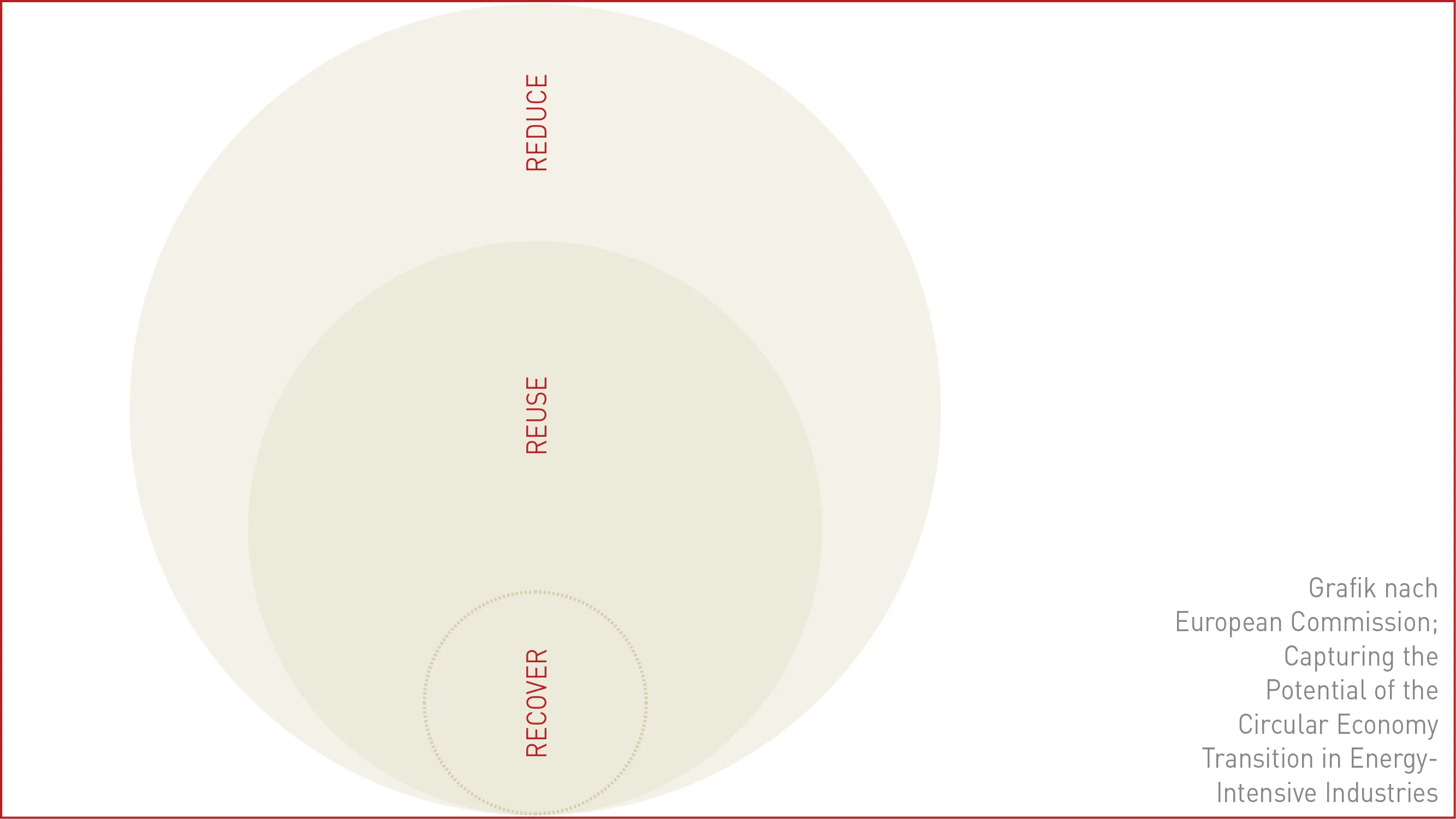
The transformation to a climate-neutral industry is increasing the pressure on energy-intensive sectors such as steel, aluminum, cement and plastics. At the same time, the importance of the circular economy is increasing as it reduces emissions, reduces resource dependencies and strengthens economic resilience. The JRC study "Capturing the Potential of the Circular Economy Transition in Energy-Intensive Industries" shows what additional decarbonisation potential can be unlocked through circular measures and what political framework conditions are necessary for this.

The transformation of the European cement and concrete sector towards a circular economy offers significant potential for reducing emissions, reducing raw material and energy consumption and strengthening the EU's strategic autonomy. The report "Environmental and Socio-Economic Impacts of the Circular Economy Transition in the EU Cement and Concrete Sector" by the Joint Research Centre (JRC) shows how technical, normative and policy innovations must work together to successfully shape the circular transformation of this resource-intensive sector.

Global construction activity is one of the central drivers of global resource consumption and the associ-ated greenhouse gas emissions. While the international community has formulated the goal of limiting global warming to well below two degrees Celsius with the Paris Climate Agreement, the CO₂ footprint of the construction sector has been rising dynamically for decades. The discrepancy between political ambi-tion and real development could become a crucial bottleneck in the coming decades. The study "Carbon footprint of the construction sector is projected to double by 2050 globally" by scientists from China, Germany, the Netherlands and Austria shows that the sector alone could be sufficient to consume the remaining CO₂ budget for the 1.5 degree target, even if other industries were fully decarbonised. The study was published in "Communications Earth & Environment".

The 2026 edition focused on the theme "Don't Think Waste - Think Opportunity", highlighting the role of waste as a secondary raw material and its economic relevance within circular value chains. Participants were required to submit short video presentations outlining their projects and their contribution to resource recovery and sustainable waste management.

Dieffenbacher presents recycling and energy solutions at IFAT 2026, focusing on fiberboard recycling, waste wood processing, Waste2Product and sustainable energy generation.