
Michael Brunn
Chefredakteur

Chefredakteur

The demand for high-quality recyclates is increasing faster than the supply. Sorting, recycling and pro-cessing are becoming strategic bottleneck factors. According to the study "Waste recycling in Germany: The investment opportunity in the German recycling industry" by KPMG, new opportunities are opening up for investors and industry at the same time.

Plastics recycling remains a problem in the circular economy. According to researchers at Pforzheim Uni-versity of Applied Sciences, however, this does not necessarily have to stay that way. In the study "Waste Management 2.0 - Plastics Circular Economy of the Future - Challenges and Solutions", they analysed what should be done better. The study is part of the präziSort research project.

European waste policy is at a turning point. Despite extensive regulation and increas-ing recycling rates, significant amounts of residual waste remain that are landfilled or incinerated, thus affecting both climate and resource targets. The report "Marginalis-ing waste: A trade scheme to reduce residuals", prepared by Dr. Dominic Hogg for Reloop and Zero Waste Europe, examines the conception of an EU-wide cap-and-trade system for municipal residual waste as an innovative management tool.

Circle Economy's "Circularity Gap Report 2026 - The Value Gap" emphasizes that global resource produc-tivity has not been increasing for a decade. More and more material is being used without any real effi-ciency gains. The current Circularity Gap Report therefore no longer focuses on the use of secondary raw materials. Rather, it examines the extent of avoidable loss of value due to linear and inefficient economic practices.

The Single-Use Plastics Directive (SEA Directive) requires Member States to report regularly on their activities. Now the European Commission has published the first figures for 2022.
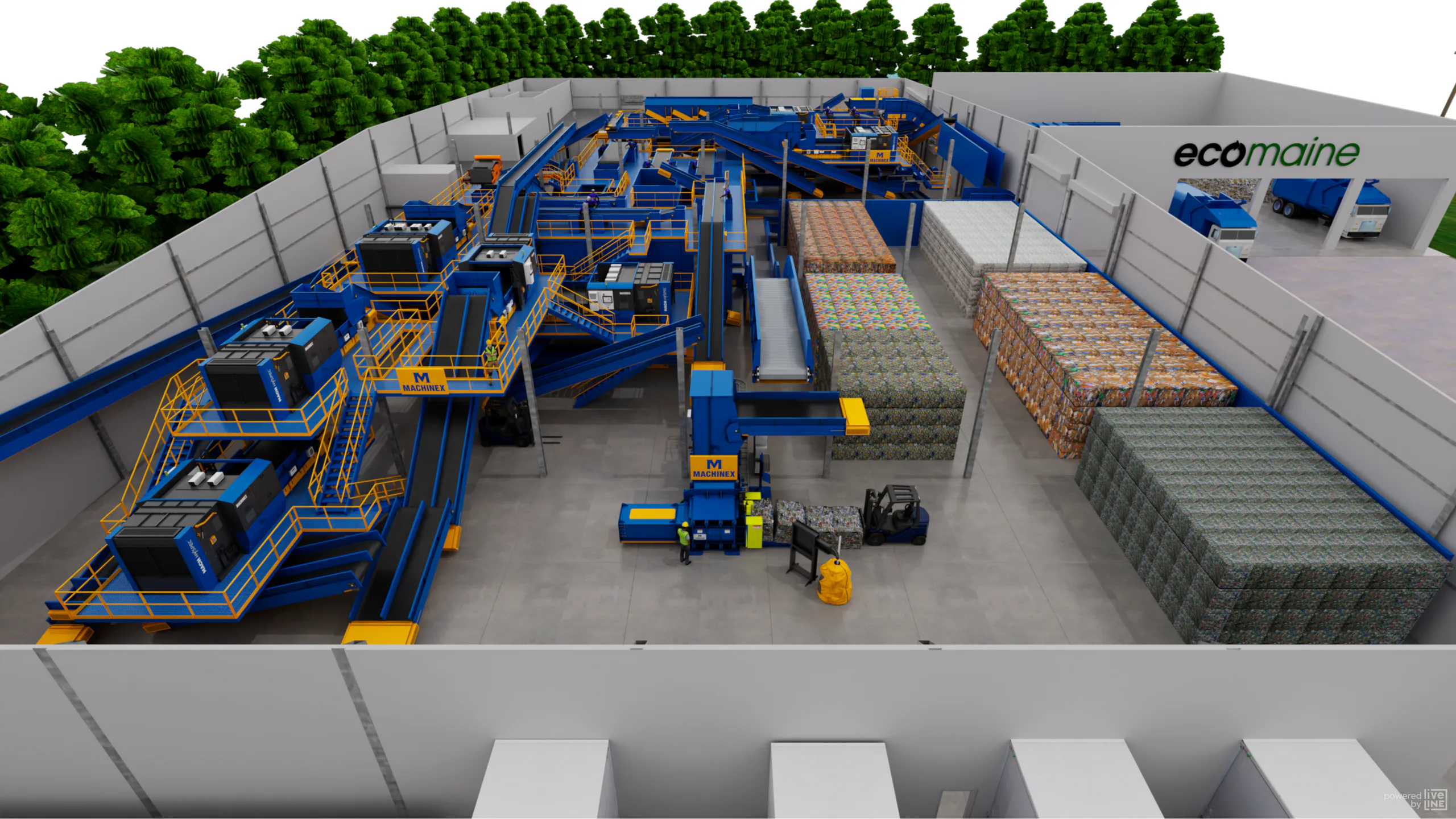
The facility will replace the current recycling plant, which entered operation in 2006. Construction is scheduled for completion in 2027. During the building phase, recycling operations at the existing site will continue without interruption.

The report presents updated data on circular plastics production, conversion, consumption, trade flows and waste management across Europe. It shows that annual growth in circular plastics production fell from 13.6 percent in 2022 to 1.2 percent in 2024. Total circular plastics output reached 8.7 million tonnes, representing 15.8 percent of overall plastics production in Europe. By comparison, global circular plastics production accelerated from 5 percent to 7.7 percent annual growth during the same period.

EREMA has received the Plastics Recycling Award Europe 2026 for its VOLEX technology, which improves degassing performance in mechanical plastics recycling.

SWEEEP Kuusakoski operates one of the UK's largest waste electrical and electronic equipment recycling facilities in Kent near London. The site processes around 25% of the UK's mixed WEEE stream and is regarded as one of Europe's more advanced recycling plants for electronic waste.

During the same period, the European Union economy continued to expand. Gross domestic product increased by 0.2% compared with the third quarter of 2025. The quarterly greenhouse gas estimates complement economic indicators such as gross domestic product and employment.