
Michael Brunn
Editor-in-Chief

Editor-in-Chief

Food waste, which accounts for over 40 percent of municipal solid waste, could become one of the most important resources in the future. Due to their biochemical composition, they are an important source of nutrients, chemicals and fuels, among other things. Scien-tists from Greece have investigated how alternative approaches to recycling food waste can benefit both the environment and the economy. The study has been published in "Sustainability".
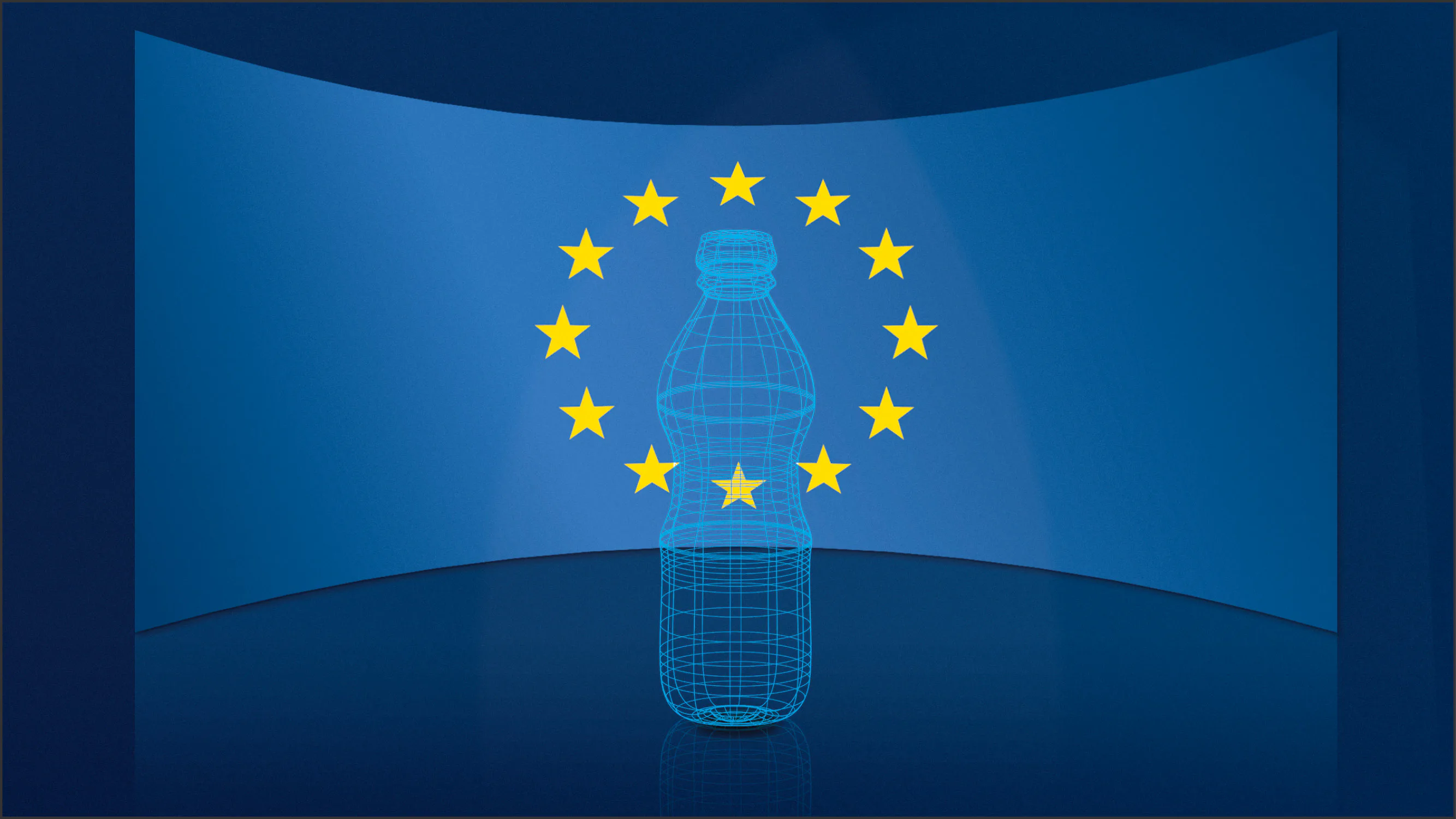
Shortly before the end of the year, the European Commission presented an amendment to the Packaging Ordinance. Among other things, new design specifications, minimum use quotas, a reduction in packaging waste and a ban on certain packaging are planned. As expected, reactions to the proposal are mixed.

Whenis a material waste and when is it not? The question of one of the essential interfaces in a circular economy was the subject of a discussion evening hosted by BDE and DGAW at the beginning of December.

Whe Federal Environment Agency reports in its report "The Use of Natural Resources - Resource Report for Ger-many 2022", 945 million tonnes of raw materials were extracted in Germany in 2019. Of this, 78 percent was ac-counted for by non-renewable raw materials. Of these, 63 percent were minerals, 15 percent fossil fuels and 0.06 percent metal ores.

The Polyproblem report "Buy yourself free - the difficult path to plastic neutrality" makes it clear that a plastic-free life is not possible. The question, however, is whether it is possible to live plastic-neutrally. The possibility of compensating for the production of plastic waste is being offered more and more often. The report questions whether it makes sense at all to compensate for the amount of plastic waste in this way.
The IERC 2023 Congress will be held in Salzburg, Austria, from January 18 to 20, 2023.

The Plastics Recycling Show Europe (PRSE) returns to the RAI Amsterdam, the Netherlands, on May 10-11, 2023, expanding into two halls for the first time.

Since the beginning of the 1940s, the Rua family business in Spain has been dedicated to the management and recovery of paper and cardboard, later expanding the activity to plastics, metals, wood, and other industrial waste.

Redwave supplies a new processing plant for the production of premium reflective glass beads.

REPurpose aims at developing and validating the production of a platform of Safe-and-Sustainable-by-Design, additive-free thermoplastic elastomer prototypes for consumer goods, automotive and building applications.