
Michael Brunn
Chefredakteur

Chefredakteur

For Germans, Germany's raw material security starts at the recycling center, as the IFAT Circularity Monitor, a representative YouGov survey commissioned by IFAT Munich, shows. 73% of Germans rate the circular economy as important with regard to national (raw material) security, and more than half see it as a pacesetter for new economic growth. At the same time, 83% state that they still feel poorly or only sufficiently informed about this subject.
The sellers of Auris Noble will retain minority ownership positions and continue to lead day-to-day operations.
The Fund supports the implementation of practical and innovative adaptation measures in communities around the world that are especially hard hit by climate change. Germany is the largest donor to this key multilateral financing instrument for climate adaptation measures, and has supported the Adaptation Fund since its inception.

The project will demonstrate the production of high-purity green metal using renewable energy for hydrogen-based reduction and smelting technologies for further downstream steel processing. The project incorporates Metso's Circored fluidized bed direct reduction process and electric DRI Smelting Furnace to support low-emission steelmaking.

Although European waste policy has been successful with landfill bans and taxes, it has usually only led to waste being diverted to incineration. This reduces landfill quantities, but not the total amount of residual waste. Therefore, a more effective approach to reducing residual waste is needed. With a view to the planned Circular Economy Act, Zero Waste Europe proposes a cap-and-trade system for residual waste analogous to emissions trading.
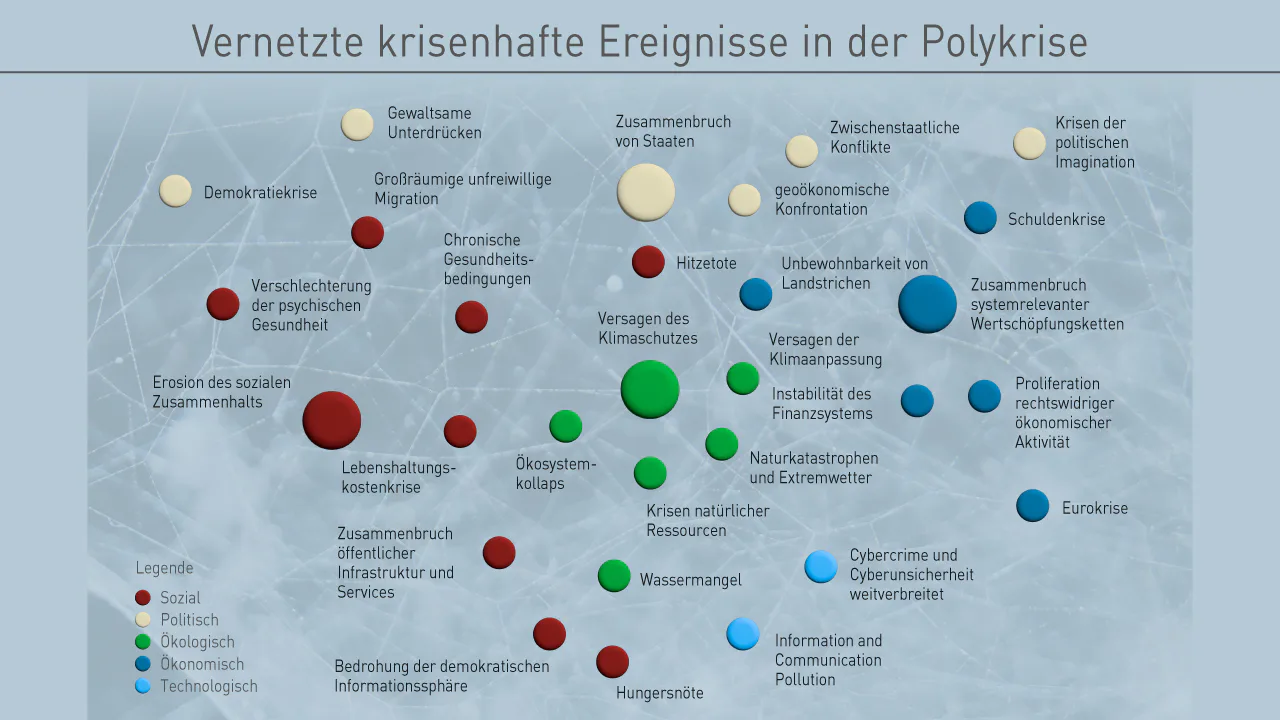
The current social and political challenges are shaped by the so-called polycrisis. Therefore, political competence is particularly needed to strengthen social and economic resilience. The Federal Environment Agency's report "Political Competence - Climate Protection in Times of Polycrisis" examines which trends are changing the requirements and possibilities of political competence and how they affect climate protection. The report was prepared as part of the Klimascan project.

Europe's transformation to a green and digital economy depends on a secure and stable supply of raw materials. Secondary raw materials play an important role in this. The Futuram project has investigated the potential of WEEE for this purpose and published initial results in the report "2050 Critical Raw Materials Outlook for Waste Electrical and Electronic Equipment in the European Union plus Iceland, Norway, Switzerland and United Kingdom".

Copper is one of the most important industrial metals of our time. It is needed in large quantities worldwide and is indispensable in energy, construction, transportation and high technology due to its unique properties. A complete replacement is hardly possible, which is why demand continues to increase with increasing population and economic growth. At the same time, the challenges are intensifying: production is concentrated in a few countries, ore grades are falling continuously, and thus energy consumption and CO₂ emissions are increasing. In addition, the recycling rates of many countries are well below their potential. Against this background, recycling is becoming increasingly important. It can relieve the geological reserves, reduce energy demand by up to 80 percent and make a significant contribution to reducing emissions. The study "Examining the influence of copper recycling on prospective resource supply and carbon emission reduction" by Chinese scientists investigated how sustainable the copper supply can be by 2100. The focus is on scenarios that capture the resource situation and emissions both globally and regionally. The study was published in "Fundamental Research".

Megacities account for around 13 per cent of the world's waste and are therefore at the centre of environmental, social and economic problems. In view of growing urbanisation and consumer demands, conventional disposal routes such as landfills or incineration will no longer be sufficient in the future. However, the circular economy concept offers a way out. Chemical recycling in particular makes it possible to recycle carbon-containing waste into recyclable materials for the chemical industry. However, in addition to technological and ecological issues, there are also social challenges. The study "Waste-to-Products" for the sustainability transformation of megacities: Case analysis of impacts of public knowledge and perception on chemical recycling deployment in Singapore" conducted by scientists from Germany and Singapore shows that technical, political and social factors must interact to enable the transition from a "waste-to-energy" to a "waste-to-products" strategy.

Urbanisation and population growth are exacerbating the problem of littering worldwide. In addition to affecting the cityscape, littering causes considerable ecological and health risks. In addition, recyclable materials that could be recycled as part of a circular economy are lost, while municipalities are burdened with high cleaning costs. The study "Study of the impact of citizens' perceived behavioural control on waste littering behaviour and the resulting environmental status" by Iranian scientists examined the problem using the example of the city of Behbahan (Iran). The aim is to analyse the tension between attitude, perceived control and behaviour and to derive starting points for measures in the sense of a functioning circular economy. The study was published in "Nature".