
Michael Brunn
Chefredakteur

Chefredakteur

Food waste is one of the biggest unsolved problems of European waste management. Despite clear political goals and the obligation to collect organic waste separately, a large part of organic waste remains in residual waste. The study "The case for Extended Producer Responsibility for food products" by Zero Waste Europe and the Bio-based Industries Consortium brings into play an instrument that has long been established in other waste streams: Extended Producer Responsibility (EPR).
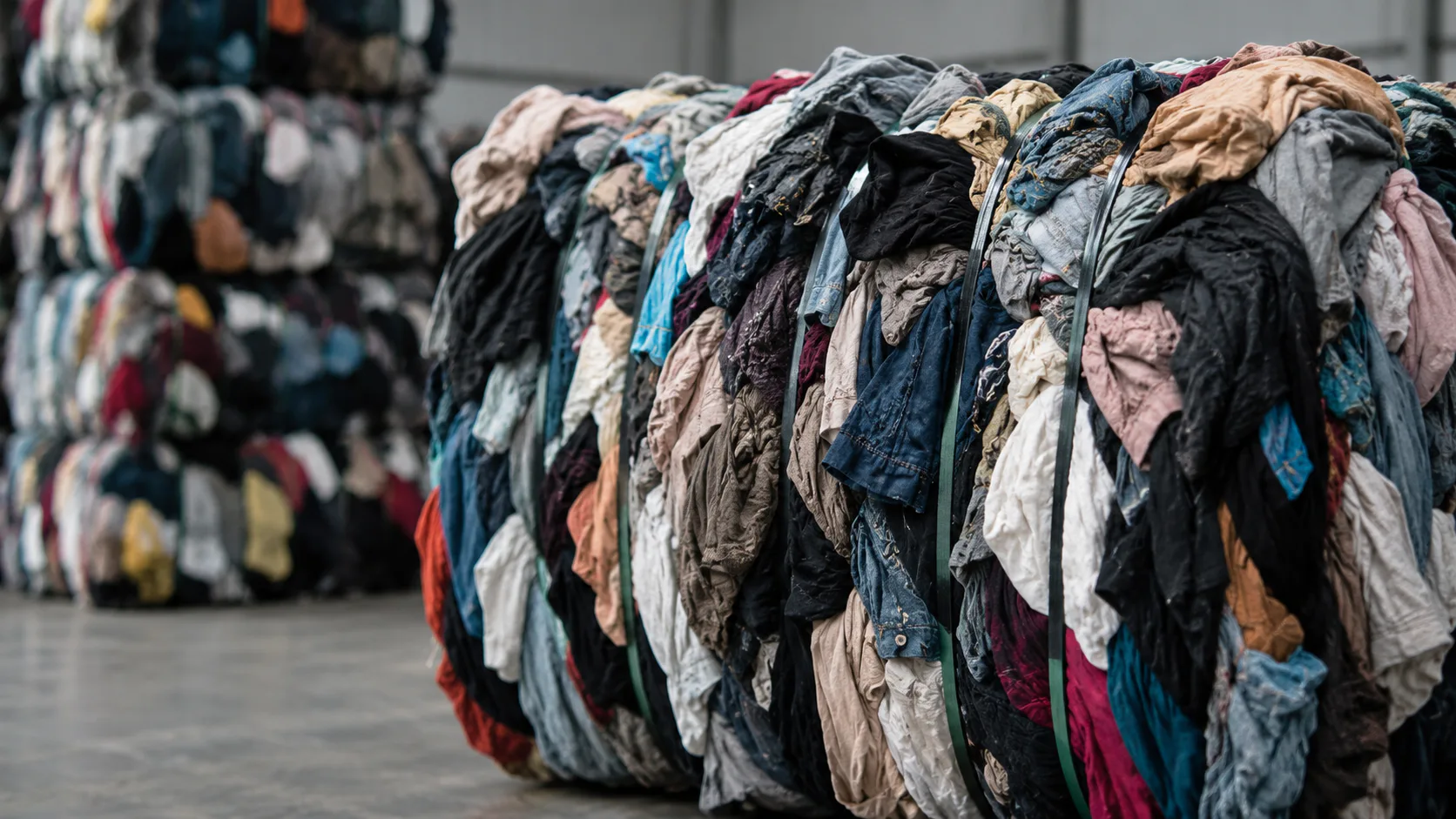
The international recycling industry has urged policymakers to adopt clear and harmonised rules for the transboundary movement of used textiles under the Basel Convention.

With the amendment of the Industrial Emissions Directive, landfills are once again moving into the focus of European environmental policy. The current state of the art shows that modern plants are already making an important contribution to climate protection. At the same time, there is still considerable potential, especially in the case of old landfills. The study "State of the art of waste disposal at landfills in Germany and its contribution to cli-mate protection in preparation for the work for a BAT leaflet on landfills" by IFAS and HiiC-CE on behalf of the Federal Environment Agency presents a comprehensive inventory and shows which technical and regulatory developments will shape the industry in the future.

Food losses cause enormous economic and environmental damage along global supply chains. Avery Dennison's "Making the invisible visible" study finds that around $540 billion in economic losses are generated annually in retail and upstream supply chains alone. New digital technologies promise more transparency about inventories, shelf life and flows of goods.

In a recent report, Zero Waste Europe warns that the EU is also setting the wrong incentives with its textile strategy.

The World Meteorological Organization's global climate data for 2025 show a significant acceleration of key trends from rising greenhouse gas concentrations to record temperatures and a growing energy imbalance in the Earth system. These developments are not without consequences for industrial value chains.

Recycling Europe issues a warning about the structural issues endangering European plastic recycling.

The world is at a turning point in dealing with growing waste. Poor waste management has significant consequences, but at the same time offers opportunities: investing in sustainable and efficient systems can boost growth, jobs and innovation. In particular, the circular economy, which focuses on reuse and value retention, can turn waste into an engine of sustainable development. The World Bank Group's "What a Waste 3.0" report provides up-to-date data and analysis on global trends in waste management.

Knowledge of cathode chemistry is increasingly decisive for the efficiency of modern recycling processes. The previous practice of processing heterogeneous batteries together leads to com-plex material flows and decreasing metal yields. The study "Identification of waste lithium-ion battery cell chemistry for recycling" by Finnish scientists shows that new diagnostic methods such as incremental capacity analysis can enable non-destructive pre-sorting for the first time. The study was published in "Waste Management".

Biogenic waste is one of the largest sources of raw materials in the European circular economy, which has so far been underestimated. Food residues, wood waste, sewage sludge and agricultural residues accumulate in enormous quantities, but are still often incinerated or landfilled. The study "Assessing the potential to enhance the circularity of bio-based waste" by Magellan Circle and 3drivers shows that more than half of these materials could be used in a higher quality. To achieve this, better separate collection, new recycling technologies and clear political framework conditions for a circular bioeconomy are crucial.