More resilience for rare earths
The so-called rare earths are playing an important role in more and more applications. However, Germa-ny has no deposits of its own and is dependent on imports.

The so-called rare earths are playing an important role in more and more applications. However, Germa-ny has no deposits of its own and is dependent on imports.

Industry associations are calling for risk-based EU criteria for recycled building materials and warn of duplicate checks and additional bureaucracy.

Recycling Europe welcomes the EU decision not to pursue proposed restrictions on aluminium scrap exports and calls for further dialogue.

The European Commission has announced the Circular Economy Act for the autumn. Through a series of publications, the law is getting clearer contours.

Many circular economy technologies and business models have passed the pilot phase, but their scaling often fails due to regulatory fragmentation, weak markets for secondary raw materials and a lack of data interoperability.
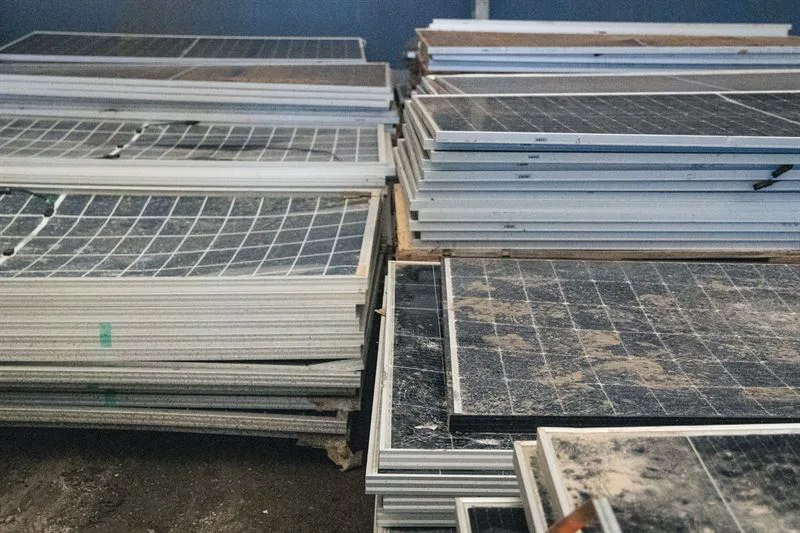
Sweden could need to manage up to 150,000 tonnes of end-of-life solar panels annually by around 2060.

Waste electrical and electronic equipment has considerable potential for the recovery of critical raw materials. However, there are still considerable gaps between technical feasibility and industrial implementation.

In addition to the intended effects, measures to promote the circular economy can also have unintended effects that undermine political objectives or cause new conflicting goals.

According to Eurostat, environmental tax revenues in the EU amounted to 371.9 billion euros in 2024.