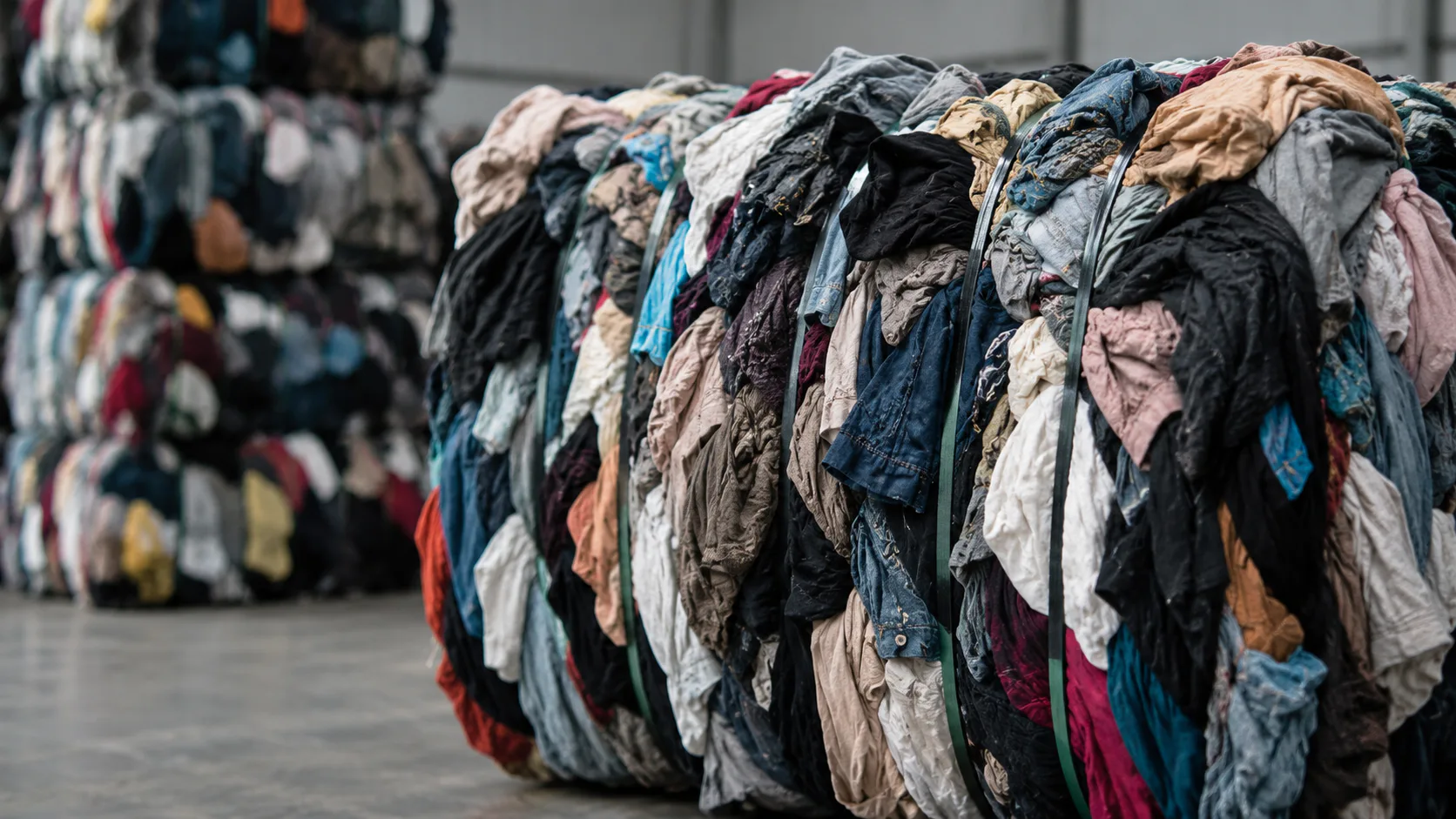
Global Recycling Day highlights role of recycling
Global Recycling Day highlights the role of recycled materials in manufacturing, supply chains and economic performance across international markets.

Global Recycling Day highlights the role of recycled materials in manufacturing, supply chains and economic performance across international markets.

Vartan brings over four years of professional experience in diplomacy, governance, sustainable development and capacity building, alongside a strong international background gained across diverse institutional settings in Europe.

Asahi Kasei, Nippon Steel and Nippon Steel Trading establish a closed-loop system for titanium recycling in chlor-alkali electrolysis cell production.

Plastics are essential materials in everyday modern life, but their durability and versatility lead to considerable stress for both the ecology and human health. Through physical, chemical and biological processes, they break down into micro- and nanoparticles that can be detected in soils, waters and the atmosphere. At the same time, there is increasing evidence of toxicological effects such as inflammatory reactions, oxidative stress and endocrine disruptions, while the long-term health consequences remain largely unclear. Against this background, strategies to reduce plastic input, develop standardised detection methods and promote sustainable recycling and upcycling technologies are of essential importance. The study "From Harm to Hope: Tackling Microplastics' Perils with Recycling Innovation" conducted by Italian scientists provides an overview of the formation, detection and health relevance of microplastics as well as current approaches to the circular economy. The study was published in the journal "Molecules".

From a political point of view, the concept of reuse is highly valued, but insufficiently anchored in both legal and operational terms. It intervenes in established material flow and business models, but without being backed up by clear specifications, incentives or responsibilities. For the waste management industry, this creates conflicting goals, additional costs and a certain degree of uncertainty. The question of whether reuse targets actually bring about real waste avoidance or merely have a symbolic political effect therefore remains open. In the report "Targets for reuse and preparing for reuse in the European Union", the Belgium-based NGO RReuse has examined current reuse practices and possible new designs.

The reduction of greenhouse gas emissions is a central goal of international climate policy. The circular economy promises to make an important contribution here, as it combines resource conservation and climate protection. But not all practices work the same: While preventive approaches such as product design can reduce emissions, other measures sometimes lead to unexpected effects. The report "Unpacking Circular Economy Practices and Carbon Emissions Relationships: Co-benefits and Legitimacy Perspectives" examines which strategies are actually effective and how theoretical perspectives help to better understand their impact. The report was published in "Business Strategy and the Environment".

The circular economy is at the core of the European sustainability framework. In view of current crises such as the pandemic and energy shortages, this transition is becoming even more important. Previous research has mostly focused on individual drivers such as recycling or resource efficiency. The role of digitalization and the influence of external shocks on circular processes, on the other hand, have been investigated only to a limited extent. The study "Economic, technological and environmental drivers of the circular economy in the European Union: a panel data analysis" by researchers from Romania and Spain attempts to determine the effect of economic, ecological and technological factors on the use of circular materials. The study was published in "Environmental Sciences Europe".

The 2020 report "Breaking the Plastic Wave" by The Pew Charitable Trusts provided the first robust roadmap to combat global plastic pollution. Since then, the data situation has improved significantly. The "Breaking the Plastic Wave 2025" update uses the expanded state of knowledge to present the ecological, economic, health and social consequences of the global plastic cycle more comprehensively.

The European Union has set itself ambitious goals with the Green Deal: A central instrument for achieving these goals is the EU Taxonomy, a classification system for sustainable economic activities. From 2025, the regulation will apply comprehensively to all companies covered by the Corporate Sustainability Reporting Directive (CSRD), bringing it even more into the focus of the financial and real economy. However, the implementation is complex. Different methodological approaches, incomplete data and ongoing adjustments due to FAQs and legislative changes make it difficult to report consistently and comparably. At the same time, the central challenge remains: the taxonomy is not only intended to create regulatory transparency, but also to steer capital flows into sustainable activities and thus support the transformation of the economy. Against this background, the current PwC study on the EU Taxonomy 2025 analyzes the reports of financial institutions across Europe and shows key developments, progress and stumbling blocks. It illustrates where regulation is already having an effect and where there is still a need for improvement so that the taxonomy achieves its actual goal.

As the drive to improve recycling efficiency intensifies, more and more attention is being paid to keeping dust within the process flow. And controlling particulates is not only good for workplace health and compliance, it's better for productivity and the bottom line, too.

Europe's path to sustainability faces a hidden obstacle. The most resource-intensive waste stream doesn't come from plastic or packaging, but from the rubble beneath our feet: construction and demolition waste (CDW) makes up almost half of everything we discard in the EU. Yet, this vast amount of debris is not just waste, it's also Europe's greatest untapped resource and an immense opportunity for innovation and value creation.

Concrete is considered harmful to the climate. A start-up from Berlin wants to change that: Biogenic residues are used as carbon-storing aggregates in concrete - to turn the building material into a carbon sink, but also to specifically improve the properties of the concrete.

Tomra Recycling has published its latest eBook titled "AI in Recycling: Unlocking New Possibilities". The digital guide focuses on the growing role of artificial intelligence (AI), particularly deep learning, in transforming recycling processes and advancing material circularity.
Vanden Recycling has launched a campaign to provide free polymer analysis reports during October. The initiative, available to businesses in the UK, Europe, Turkey, India and Australia, is intended to help stakeholders better understand the composition, contamination levels and processing potential of their plastic materials.
Researchers at Iowa State University have compiled a new resource that brings together regulated and restricted substances relevant to food packaging. The work, supported by the Institute for the Advancement of Food and Nutrition Sciences (IAFNS), analyzed international and domestic chemical lists with a focus on food contact materials (FCMs). These include multilayer plastic and paper packaging, can coatings, utensils and other items widely used in the food sector.

Polypropylene (PP), one of the most widely used plastics in packaging, remains one of the most difficult materials to recycle into food-contact applications. A European initiative, Nextloopp, has announced progress in tackling this challenge by developing processes that transform kerbside post-consumer PP waste into food-grade compliant resin.

Austrian technology provider MAS has introduced its Iqonic Twin Hyper PET, a new platform designed for PET recycling. According to the company, the system combines a conical twin-screw extruder with an infrared-based solid-state polymerisation (SSP) step that operates without nitrogen. This approach is said to deliver stable viscosity levels, consistent colour quality, and reduced acetaldehyde content, while lowering overall energy demand.

BASF, Porsche and technology partner BEST have successfully completed a pilot project that demonstrates how complex waste streams from end-of-life vehicles can be kept in circulation. The project focused on automotive shredder residues, which are often considered difficult to recycle and are usually incinerated, and explored how they could be turned into valuable raw materials for plastics.

The OLIWA project (Repurposing Olive Waste in circular economy solutions) has officially started with the goal of turning olive by-products into valuable co-products. Coordinated by the University of Torino, the initiative brings together 25 partners from six Mediterranean countries, including Spain, Greece, and Italy.

Roma Grus, a construction materials supplier on the island of Gotland, has partnered with CDE to open a new 140tph waste recycling plant. The facility processes construction, demolition and excavation (CD&E) waste and converts it into high-quality recycled aggregates and sand for use in new building projects.