
Subscribe to our newsletter!
Recieve the latest news on recycling, environment and circular economy once a month.
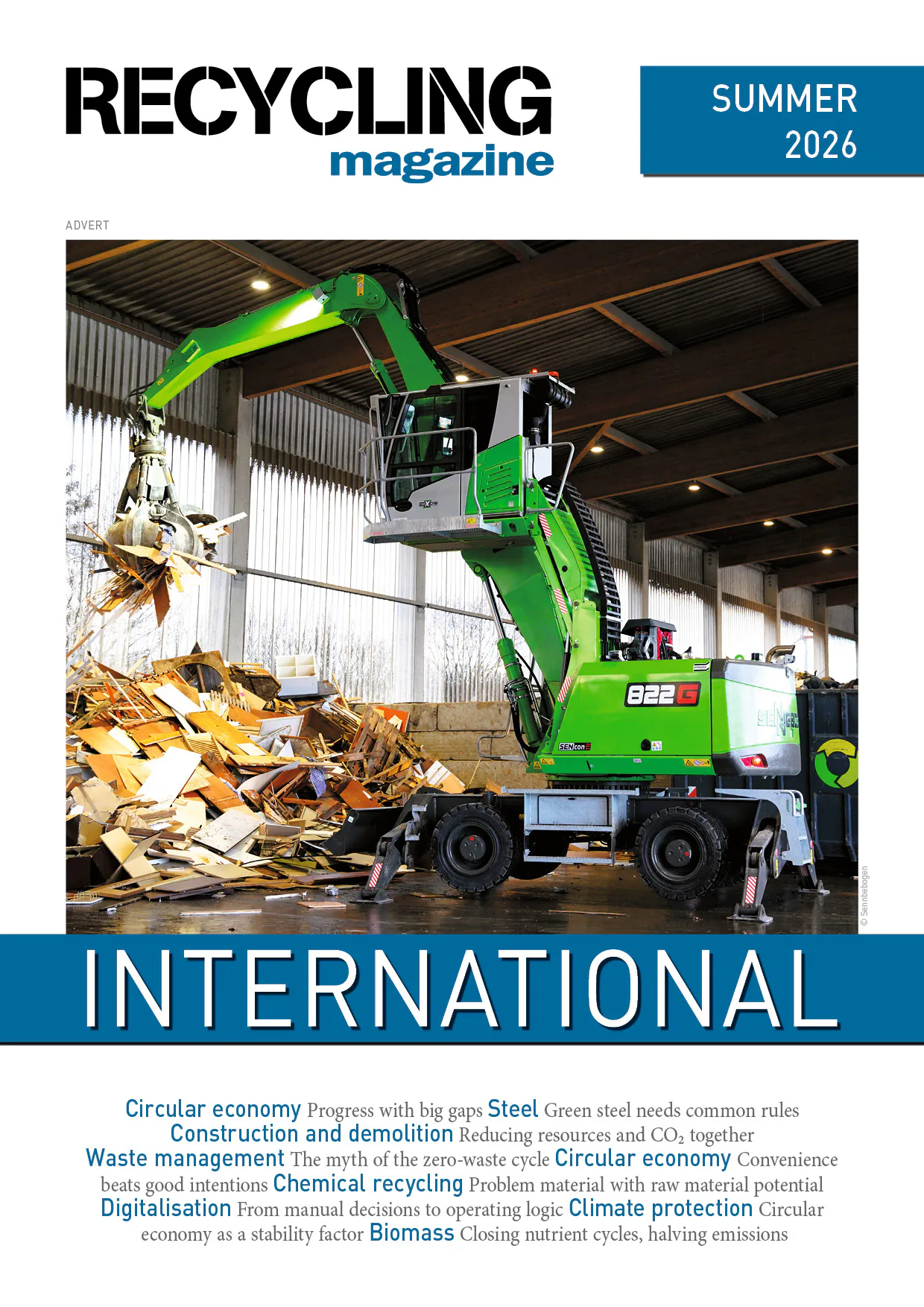
Climate change, biodiversity loss and environmental pollution are now understood as a systemically intertwined "planetary triple crisis". AI-supported systems can help operators structure their decisions earlier, improve consistency and connect physical processing with digital workflows. The reuse of concrete components is considered one of the most effective levers for reducing CO₂ emissions in the construction industry. A new report shows that a successful circular economy must not only rely on recycling and waste prevention. It depends on strategically managed waste disposal processes. Europe's cities are driving the transition to a circular economy. But there is still a clear gap between ambitious goals and reality.

Prices of recycled commodities such as metal scrap, plastics, aggregates, paper and cardboard have dropped significantly, yet the cost of processing recyclables has remained steady or even risen due to the higher prices of fuel raw materials.

The current global crisis - marked by soaring oil prices, rising energy costs and ongoing supply chain disruptions - is placing significant pressure on the plastics and recycling sector.

Recycling operations lose value when important decisions remain fragmented across intake, sorting, dis-mantling, inventory, resale and material recovery. AI-supported systems can help operators structure these decisions earlier, improve consistency and connect physical processing with digital workflows.

The Endfouling project is investigating how organic waste generated in ports can be converted into bio-based additives that help prevent marine biofouling on ships and other submerged structures.

DEScycle has commissioned its first demonstration plant at the Wilton Centre in Teesside, marking the first industrial deployment of the company's distributed metals processing platform.

Tomra Recycling is expanding the field of application of its sensor-based sorting system Autosort Pulse.

Glass packaging collection for recycling in the European Union reached a record rate of 82.2% in 2024, according to the latest figures published by Close the Glass Loop.

Europe has developed many of the technologies needed to improve battery recycling. However, experts from the European Union-funded projects FREE4LIB and RESPECT say stronger political coordination and broader industrial deployment are necessary to expand these solutions and secure access to critical raw materials.

Researchers at ETH Zurich have developed a carbon dioxide capture technology based on protein-rich by-products from dairy and soy processing. The approach uses waste streams from food production to create reusable materials that remove carbon dioxide from ambient air while requiring relatively little energy for regeneration.

Global supply chains provide detailed information about products from raw material extraction to the point of sale. However, visibility often ends once a product reaches the consumer. When products enter waste and recycling systems, data frequently becomes unavailable.

A Danish development project aims to improve the recovery of printed circuit boards and electronic components from end-of-life electronics. The initiative seeks to retain valuable materials and components within the economy instead of losing them during conventional high-temperature treatment processes.