
Subscribe to our newsletter!
Recieve the latest news on recycling, environment and circular economy once a month.


Climate change, biodiversity loss and environmental pollution are now understood as a systemically intertwined "planetary triple crisis". AI-supported systems can help operators structure their decisions earlier, improve consistency and connect physical processing with digital workflows. The reuse of concrete components is considered one of the most effective levers for reducing CO₂ emissions in the construction industry. A new report shows that a successful circular economy must not only rely on recycling and waste prevention. It depends on strategically managed waste disposal processes. Europe's cities are driving the transition to a circular economy. But there is still a clear gap between ambitious goals and reality.

The Committee for European Construction Equipment (CECE) and DLL have formalised their long-standing cooperation through a strategic partnership. The agreement marks a further step in strengthening collaboration between the European construction and mining equipment industries and key stakeholders across the sector.
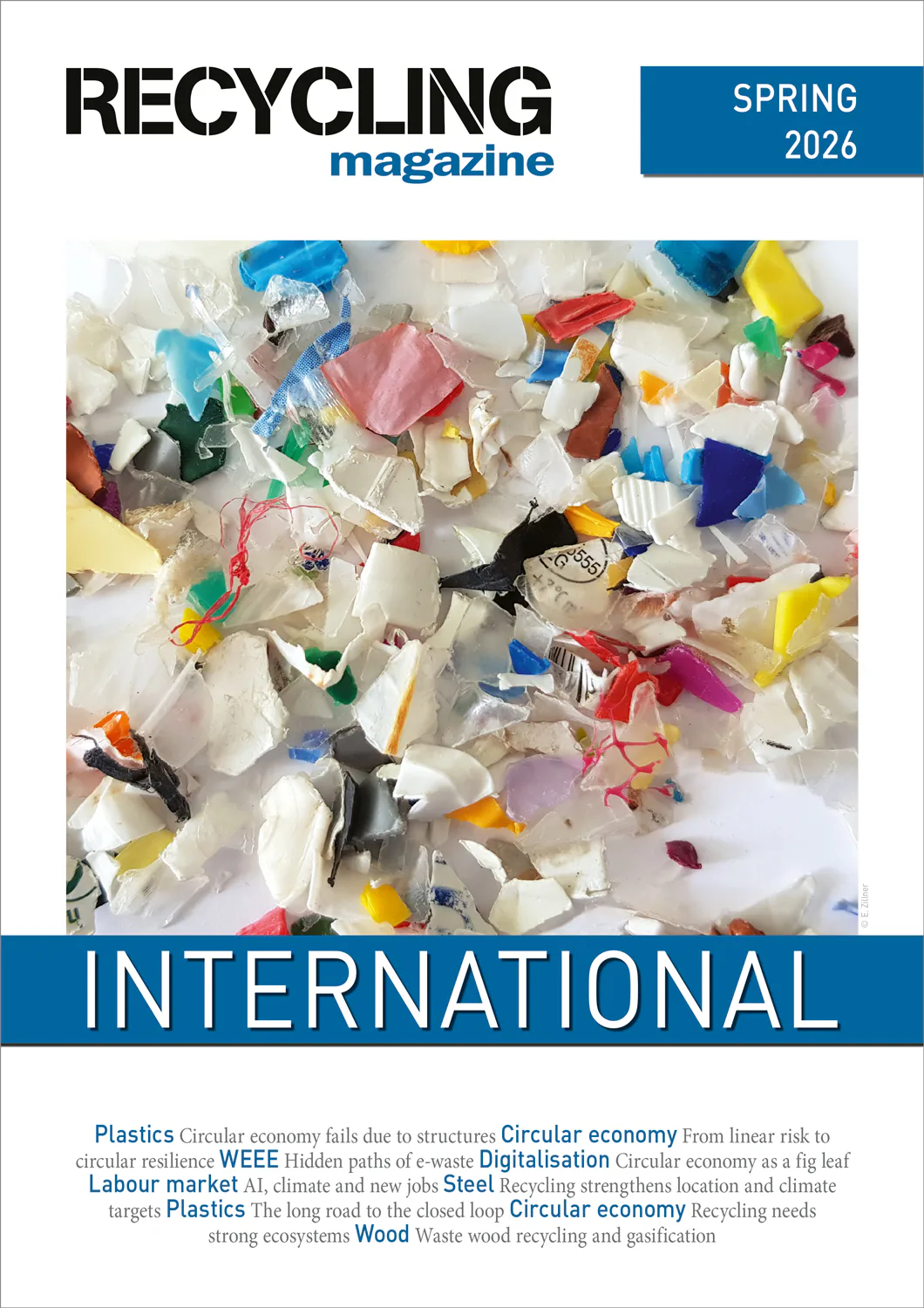
This issue explores how the circular economy can move from ambition to reality. With a focus on building strong recycling ecosystems, it highlights the need for better structures, smarter use of technology, and closer collaboration across industries. From the role of recycling in achieving climate targets to the impact of AI and digitalisation on the sector, this edition shows how circular strategies are becoming essential - not just for sustainability, but also for resilience and future competitiveness.

The current issue explores how the circular economy model is progressing in Europe - and where it's getting stuck. It looks at the need for clearer policies, standards and definitions (especially around plastics and microplastics) as well as practical tensions in areas such as consumer behaviour, city-level implementation, healthcare reuse, and biobased plastics. It also

Recent research highlights the complexity and interconnectedness of global sustainability challenges. Studies range from analysing long-term polymer demand and waste trends to exploring how design standards can enhance plastic recycling and how enzyme-based or chemical recycling might help transform materials recovery. Others address systemic issues — from the risks of placing export restrictions on UK

From transforming agricultural waste into sustainable textiles to revolutionising chemical recycling and financing models, the circular economy is gaining momentum - albeit not without hurdles. Across Europe and Southeast Asia, researchers, companies, and governments are rethinking waste, from plastics and steel to the participation of small businesses. As new studies highlight both progress and persistent

Reiling was previously represented with 10 glass recycling plants and 2 glass logistics centres in Germany, Poland, Denmark and Sweden. In Sweden, Reiling has been operating its own collection logistics for flat glass for over 20 years. To date, this has been carried out by the subsidiary in Nastved (DK) and its Swedish company Swede Glass United AB.

15 car manufacturers and the ACEA collectively have to pay around €458 million for participating in a long-lasting cartel. The tariff war is forcing nations to re-evaluate their economic and environmental priorities in the face of growing uncertainty. A study has examined whether EPR can contribute to increasing the EU's competitiveness and strategic autonomy. Even

According to Swiss scientists, excess renewable energy can be used to remove CO2 from the atmosphere and convert it to methane or methanol. Scientists have examined the role that the circular economy can play for the defence sector. The collection and recycling of post-industrial textile waste offers many opportunities. Global efforts to phase out fossil


